
How to Plan Irrigation Pipes Layout for Even Coverage
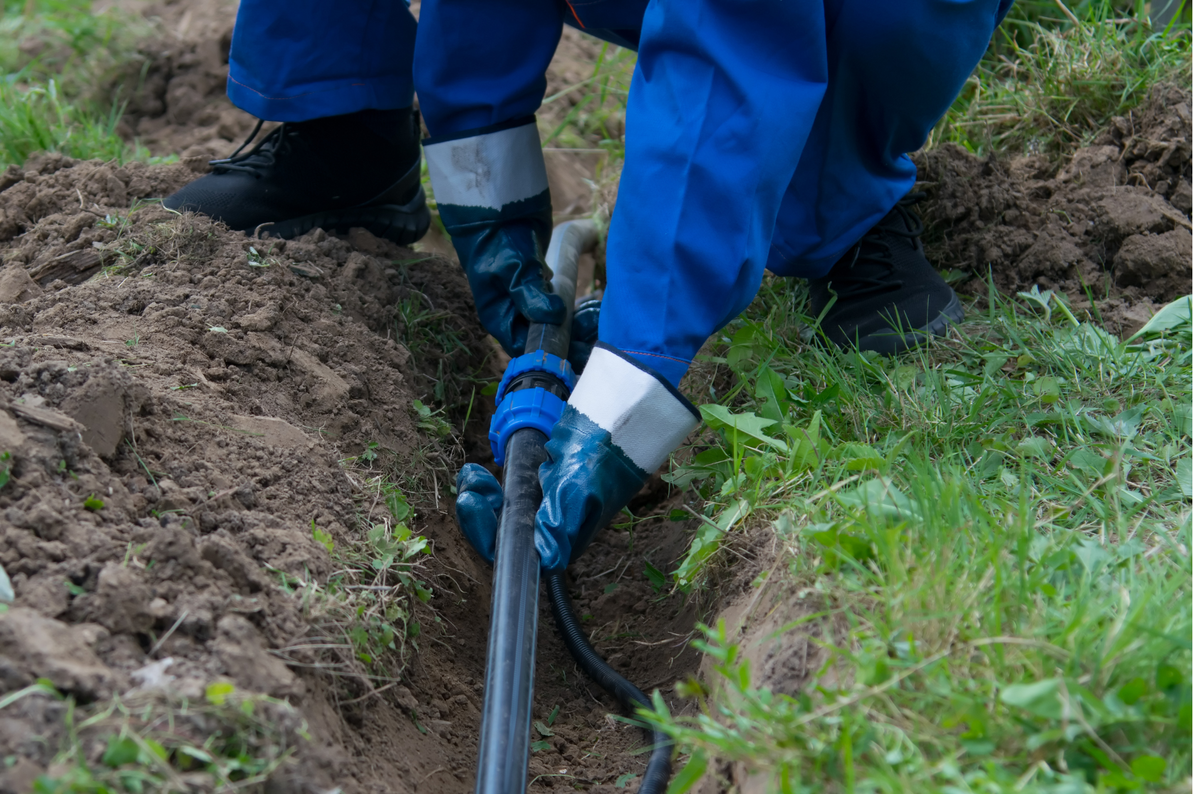
Even the best sprinklers can’t fix a poor pipe layout. In commercial landscaping, consistent coverage comes from planning your irrigation pipes around real-world conditions: mixed planting, long runs, changing levels, and water pressure limits.
This guide walks you through a practical layout process for landscape irrigation across lawns, beds and borders, including how to choose pipe materials (like polyethylene pipe and uPVC), how to protect pressure, and how a good plan reduces water waste while keeping plants healthy. To learn more, keep on reading.
Start with a site map and build sensible zones
Before you choose fittings or calculate pipe sizes, you need a simple map of what you’re watering. Commercial sites rarely have “one type” of landscape, and that’s why zoning is your foundation.
Begin by sketching the space (even a rough drawing is fine) and label:
- Lawn/turf areas
- Planting beds (shrubs, perennials, seasonal planting)
- Borders/hedging lines
- Paths, car parks, buildings and hard landscaping
- Slopes, shaded zones, windy edges, and any areas that stay wet or dry
From there, group the landscape into irrigation zones based on similar needs. A well-zoned plan helps each area get the water it needs without forcing the entire site to run at one pressure and flow level.
Good zoning usually groups by:
- Plant type (turf vs shrubs vs bedding plants)
- Sun exposure (full sun vs shade)
- Watering method (sprinklers separate from drip)
- Level changes (uplift zones separate where possible)
When zones are mixed (for example, sprinklers and drip on one valve), even coverage becomes harder because each method needs different pressure and flow.
Understand your water supply and pressure early
Pipe layout decisions should be driven by what the supply can actually deliver. Many coverage issues aren’t “sprinkler problems” at all, they’re pressure problems caused by long runs, undersized pipework or overloaded zones.
At minimum, you want to know:
- Static pressure (pressure when no water is flowing)
- Dynamic/working pressure (pressure while the system is running)
- Flow rate (how much water you can deliver over time)
Even if you’re not doing full hydraulic calculations, you should plan with pressure drops in mind. The further water travels, and the more restrictions you add, the more pressure you lose, and that usually shows up as the last heads in the line underperforming.
Common causes of pressure loss include:
- Long pipe runs with too many heads on one zone
- Too many elbows/tees and sharp direction changes
- Undersized pipe on main routes
- Height gain (uphill runs reduce effective pressure)
Choose the right irrigation method for each area
A typical commercial landscape works best with a blended approach. Your layout should match the method to the planting style, not force one solution everywhere.
Lawns / turf
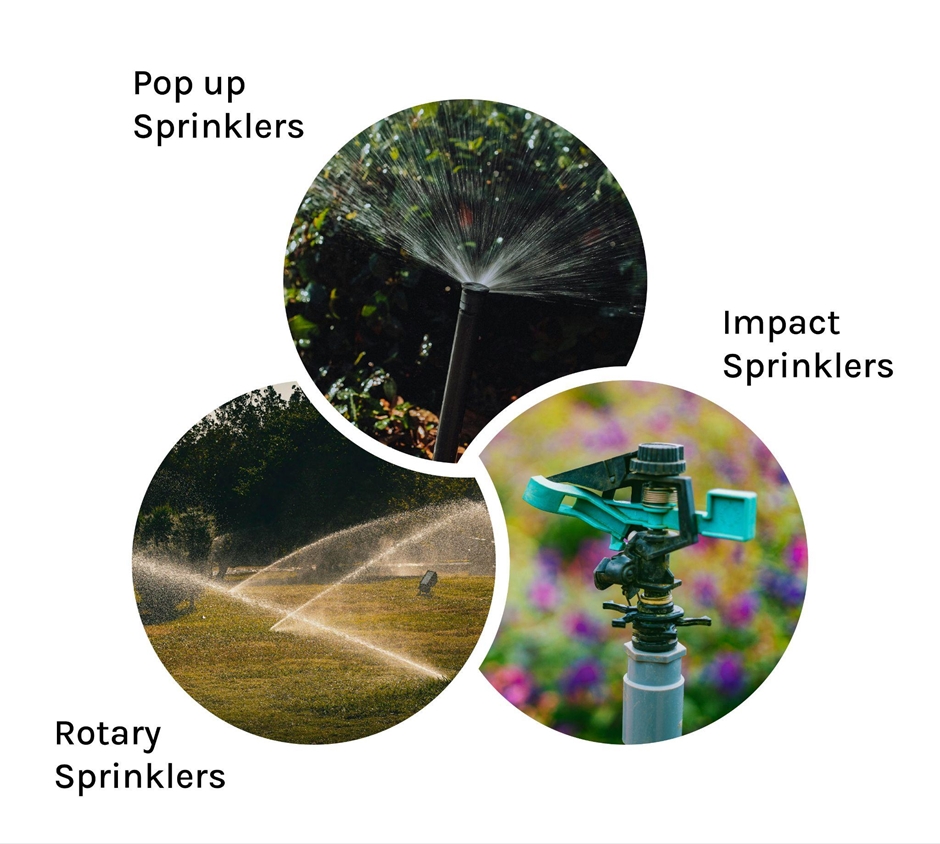
Sprinklers and rotors are usually the best option for lawns because they cover larger areas evenly when spaced properly.
Beds and borders
Beds and borders often perform better with dripline or micro irrigation because it reduces overspray onto paths, keeps water close to roots, and can be more efficient in windy areas.
For cohesion in your design, decide this early: it affects zone design, pressure requirements, and pipe routing.
Select pipe material: polyethylene pipe vs uPVC
Your pipe material choice affects how you route the system, how long it lasts, and how easy it is to modify later.
In many commercial irrigation systems, installers use a hybrid approach:
- A rigid “backbone” for main distribution
- Flexible laterals to feed heads and dripline efficiently
- uPVC (often used for mainlines/submains)
uPVC is common where you want strong, rigid pipework and neat valve assemblies. It pairs with a wide range of PVC pipe parts such as elbows, tees and connectors.
uPVC can be a good fit when:
- You want straight, stable routes
- You need robust pipework around valve manifolds
- The landscape is unlikely to shift or be disturbed frequently
Polyethylene pipe (commonly used for laterals and drip)
Polyethylene pipe is flexible, quicker to route around obstacles, and widely used for laterals feeding sprinklers, dripline, and micro irrigation.
Polyethylene often suits commercial sites because:
- It handles gentle curves without lots of fittings
- It’s easier to extend or alter later
- Installation can be faster in complex landscapes
The most important point is consistency - pick a material strategy and stick to it. Random switching mid-run is where systems become messy, hard to maintain, and prone to leaks.
Design the layout in layers
A cohesive irrigation pipe layout is easiest to plan when you think in layers. This “tree structure” keeps pressure more stable and makes the system easier to troubleshoot.
- Mainline: from water source to valve locations
- Submains: distribution routes feeding multiple zones
- Laterals: pipes serving sprinklers/emitters inside one zone
Practical routing principles
Aim for a layout that’s efficient on the page and realistic on site:
- Keep main routes short and direct
- Place valves close to the zones they control
- Avoid unnecessary elbows (each fitting adds resistance)
- Route around permanent hard landscaping sensibly (don’t create a maze)
Pipe sizing: the key to even coverage and stable pressure
Pipe sizing is where coverage is won or lost. If the pipe is too small, friction increases and the far end of the line suffers. If it’s too large everywhere, costs rise unnecessarily.
A good planning approach is simple:
- Use larger pipe for mainline and sub-mains (to reduce friction loss)
- Step down for laterals feeding a limited number of heads
This keeps pressure more stable across each zone, which helps sprinklers perform as designed.
How undersized laterals show up on site:
- Poor pipe sizing often leads to a familiar pattern:
- Heads nearest the valve spray strongly
- Heads at the end fall short or mist
- Dry patches appear, and the “fix” becomes longer run times (wasteful)
If a zone needs lots of sprinklers, it’s usually better to split it into two zones than to force one long, overloaded run.
Sprinkler spacing: plan for overlap, not “just reaching”
For lawns, sprinkler coverage depends on overlap. Sprinklers don’t apply water evenly from centre to edge, they typically apply less at the perimeter. That’s why “head-to-head” spacing is a standard principle: each sprinkler’s throw reaches the next sprinkler.
For turf zones, aim for:
- Head-to-head coverage wherever possible
- Consistent spacing based on nozzle/rotor specs
- Minimal overspray onto paths and buildings
For narrow strips, sprinklers often waste water. In those cases, a border-specific nozzle or dripline can give better results with less runoff.
Get the right irrigation components first time
If you’re planning landscape irrigation for a commercial site, having the right components to hand makes your install cleaner, faster, and easier to maintain. For irrigation pipes, polyethylene pipe, and reliable PVC pipe parts for professional installations, you can source everything in one place from Irrigation Online. Get in touch with our team for more information or any questions.
Recent Posts
-

Choosing the Right Irrigation Parts for Your System
At Irrigation Online, we speak to customers every day who are building new irrigation systems or upg …25th Feb 2026 -
How to Plan Irrigation Pipes Layout for Even Coverage
Even the best sprinklers can’t fix a poor pipe layout. In commercial landscaping, consistent coverag …25th Feb 2026 -
The Importance of Effective Sports Ground Watering Systems
Maintaining a high‑quality pitch isn’t just about grass and goals. For sports clubs, councils and fa …22nd Jan 2026