
What Is Drip Irrigation and When Should You Use It?
If you've spent any time researching efficient ways to water a garden, sports surface or equestrian arena, you'll have come across the term "drip irrigation" more than once. It's one of the most water-efficient methods available, but it isn't the right fit for every space. Here's how it works, where it earns its keep, and what you'll need to get started.
How Does Drip Irrigation Work?
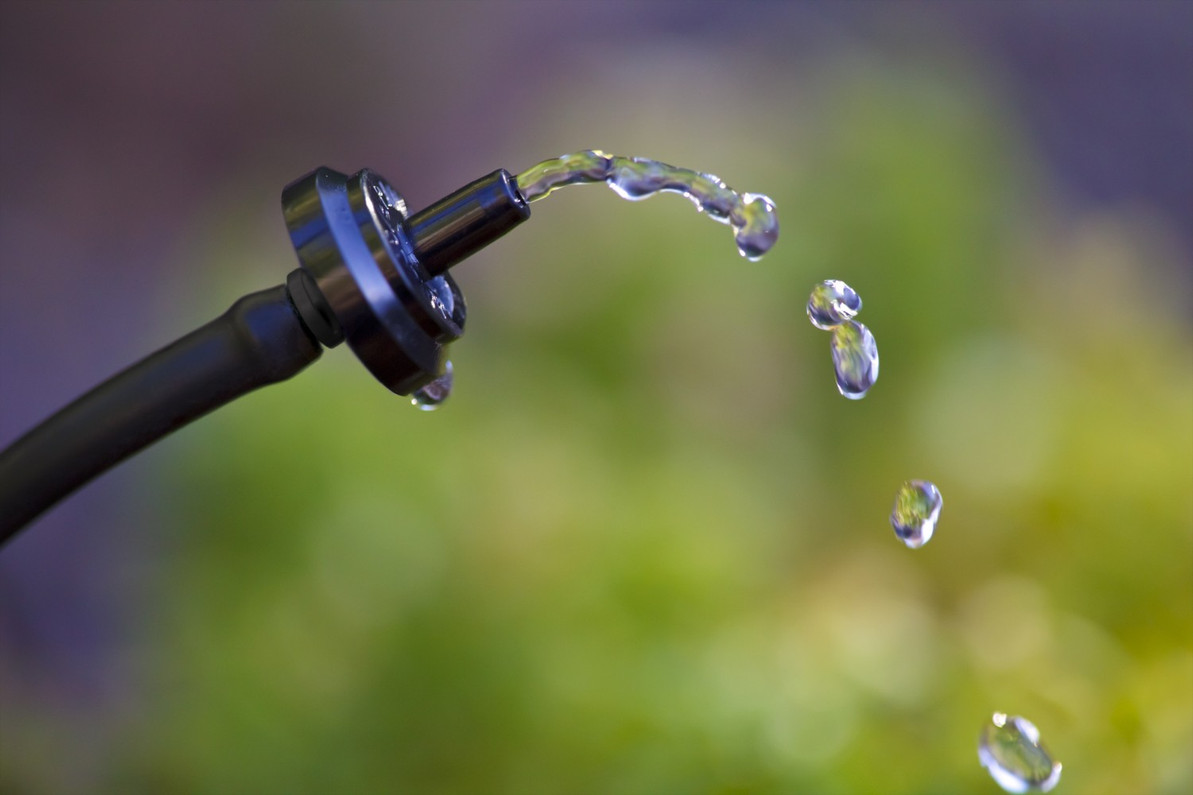
Drip irrigation works by delivering water slowly, drop by drop, directly to the base of each plant rather than spraying it across a wider area. Water travels through a supply pipe to a network of drip line or individual drippers (also called emitters), which release a measured, steady flow, usually somewhere between one and eight litres per hour, straight into the root zone.
Because the water goes exactly where it's needed, very little is lost to evaporation, wind drift or run-off on paths and patios. The soil surface between plants stays drier too, which helps keep weed growth down. Systems can run above ground, tucked under mulch, or buried just below the surface, and most can be left to run on a timer with minimal supervision.
In short: drip irrigation trades wide coverage for precision, applying water gradually and directly where plant roots can use it.
Where Does Drip Irrigation Work Best?
This is really a question of area and plant type rather than one system being universally "better" than the other. Drip irrigation comes into its own in borders, vegetable beds, hedges and containers, anywhere plants are spaced out or grown in rows, and precise, repeatable watering matters more than blanket coverage. Our drip irrigation range is built around exactly these situations, from single drippers for pots to full drip line runs for long borders and hedgerows.
Open lawns and large turf areas are a different matter. Grass roots are shallow and spread evenly across the whole surface, so a system that sprays water over a wide area, such as a pop-up or rotor irrigation sprinkler, will almost always outperform drip line on a lawn.
|
Feature |
Drip Irrigation |
Sprinklers |
|
Best suited to |
Borders, veg beds, hedges, containers |
Open lawns, large turf areas |
|
Water efficiency |
Very high, minimal evaporation or run-off |
Moderate, some loss to wind and evaporation |
|
Coverage pattern |
Targeted, plant by plant |
Broad, even spray across an area |
|
Typical installation |
Supply pipe and drip line laid to each plant |
Risers or heads spaced across the area |
In short: choose drip irrigation for planted areas and containers, and stick with sprinklers for open lawns.
What's In a Basic Drip Irrigation Kit?
A straightforward domestic or small commercial setup doesn't need to be complicated. The core components are:
- Tap connector – attaches the system to an outside tap or mains supply, often via our threaded fittings if you're adapting an existing pipe run.
- Pressure regulator – reduces mains pressure down to the level drip emitters are designed to work at, usually around 1.5 bar.
- Filter – catches grit, scale and debris before it reaches the emitters, and is a core part of our irrigation filters range.
- Supply pipe – carries water from the tap connector to the growing area, usually 13mm or 16mm.
- Drip line or drippers – the emitters themselves, either built into a length of pipe or fitted individually to a supply line.
- Timer – automates the watering schedule so beds and containers get consistent watering even when you're not around.
Many of these components are bundled together in our landscape watering kits, which are a good starting point if you'd rather not source each part separately, alongside our range of irrigation controllers if you want to run several zones on different schedules.
In short: a working drip system needs six core parts, and most of them can be bought as a ready-made kit rather than pieced together individually.
What Common Mistakes Should You Avoid?
The most frequent issue we see is skipping the pressure regulator. Mains pressure is far higher than drip emitters are rated for, and running a system without one leads to blown fittings, uneven flow and a shortened lifespan for the whole setup. A close second is leaving out the filter; even small amounts of grit or scale will clog emitters over time, leading to patchy watering that's hard to diagnose after the fact.
Poor layout planning causes its own set of headaches. It's worth mapping out your beds, containers and hedge runs before cutting any pipe, so you know how many emitters each zone needs and where the supply line has to reach. Overlong runs without enough pressure, or drip line laid without accounting for slopes and existing planting, tend to result in some plants getting plenty of water and others barely any.
In short: most drip irrigation problems trace back to a missing regulator or filter, or a system laid out without a proper plan.
Frequently Asked Questions
Is drip irrigation suitable for a small garden? Yes. Drip irrigation is particularly well suited to smaller spaces, as it can be tailored precisely to individual beds, borders or containers without wasting water on paths or patios.
Can drip irrigation be used with a normal outside tap? Yes, with the right tap connector, pressure regulator and filter, a drip system can be run directly from a standard outside tap.
Does drip irrigation work for vegetable beds? Very well. Watering directly at the root zone keeps foliage dry, which can help reduce the risk of fungal problems, while ensuring consistent moisture for growing crops.
How long should a drip irrigation system run for? This depends on emitter flow rate, soil type and plant needs, but most domestic systems run for 20 to 60 minutes per session, a few times a week rather than daily.
Ready to Set Up Your Own System?
If you're weighing up drip irrigation for your garden, allotment or grounds, our team is happy to talk through what a suitable layout would look like for your space. Browse our drip irrigation range or get in touch with us for advice on choosing the right kit for your setup.
Sources and Further Reading
- RHS: Garden Watering Methods
- Efficient Watering Solutions for Small Garden Spaces
- A Step-by-Step Guide to Automated Irrigation System Setup
Recent Posts
-
What Is Drip Irrigation and When Should You Use It?
If you've spent any time researching efficient ways to water a garden, sports surface or equestrian …15th Oct 2026 -

ECB County Grants Fund 2026: How Cricket Clubs Can Plan Ground and Facility Improvements
If your cricket club has been putting off ground improvements because of the cost, there's a funding …1st Sep 2026 -
A Step-by-Step Guide to Automated Irrigation System Setup
Designing and installing an automated irrigation system is one of the most effective ways to maintai …27th May 2026